

Urinary stone recurrence, risk factors and individualized prevention: a narrative review
Recurrencia de la litiasis urinaria, factores de riesgo y prevención individualizada: una revisión narrativa
[Artículo en inglés/ Article in English]
Vol. 10 Núm. 4. Agosto 2026 - Octubre 2026.
e-ISSN: 2530-5468 - Open Access Journal
DOI: 10.5281/zenodo.23034933
Published under Creative Commons CC BY-NC-ND 4.0


Sanum. vol. 10, número 4 (2026) páginas 140 – 150
AUTHORS:
Pedro Alfonso Nieto Rodríguez¹ (0009-0008-9198-8080)
Daniel Alonso López Vallejo² (0009-0005-3679-2438)
Laura Juliana Padilla García² (0009-0001-6541-308X)
Jeanina Carolina Linero Manjarrés³ (0009-0000-8999-2592)
Julian David López Ortega⁴ (0009-0004-2977-4912)
Juan Felipe Valencia Betancourt⁵ (0009-0002-1413-2242)
Affiliations
¹ Facultad de Ciencias de la Salud, Universidad del Quindío. Armenia, Colombia.
² Facultad de Ciencias de la Salud, Universidad Alexander Von Humboldt. Armenia, Colombia.
³ Facultad de Ciencias de la Salud, Universidad del Magdalena. Santa Marta, Colombia.
⁴ Facultad de Medicina, Universidad El Bosque. Bogotá, Colombia.
⁵ Escuela de Medicina, Fundación Universitaria Juan N. Corpas. Bogotá, Colombia.
Como citar este artículo:
Nieto Rodríguez PA, López Vallejo DA, Padilla García LJ, Linero Manjarrés JC, López Ortega JD, Valencia Betancourt JF. Recurrencia de la litiasis urinaria, factores de riesgo y prevención individualizada: una revisión narrativa SANUM 2026, 10(4) pp 140 – 150. DOI: 10.5281/zenodo.23034933
© Los autores. Publicado por SANUM: Revista Científico-Sanitaria bajo una licencia Creative Commons Atribución-NoComercial-SinDerivadas 4.0 Internacional (CC BY-NC-ND 4.0). 
How to cite this article:
Nieto Rodríguez PA, López Vallejo DA, Padilla García LJ, Linero Manjarrés JC, López Ortega JD, Valencia Betancourt JF. Urinary stone recurrence, risk factors and individualized prevention: a narrative review. SANUM 2026, 10(4) pp 140 – 150. DOI: 10.5281/zenodo.23034933
© The authors. Published by SANUM: Revista Científico-Sanitaria under a Creative Commons Attribution-NonCommercial-NoDerivatives 4.0 International License (CC BY-NC-ND 4.0).
Article type: Review article.
Section: Urology.
Received: 29-07-2026.
Accepted: 02-09-2026.
Published: 30-10-2026.
ABSTRACT
Introduction: urinary stone disease recurs in up to two of every three patients within five years of the first episode, and treating the index stone does not modify that risk. Research on risk factors and research on preventive strategies have advanced separately, so neither resolves the clinician’s decision at follow-up: which measure to prescribe to which patient.
Methods: narrative review based on a structured search of four databases (PubMed, Scopus, Web of Science, and SciELO), without date restriction, in studies published in English, Spanish, and Portuguese. The synthesis focused on prospective cohorts and randomized controlled trials with at least 50 participants (35 studies, 1977-2026).
Results: hydration adherence was protective in all five studies evaluating it (HR 0.32 per additional liter of urine output), the only factor with complete concordance; hypercalciuria and hypocitraturia showed a majority but not unanimous association. Citrate, thiazides, and allopurinol were mostly favorable. Diet tailored to the metabolic profile reduced recurrence to 6%, versus 19% with generic diet, which in one trial was also associated with greater recurrence than hydration advice alone (RR 5.6).
Conclusion: preventive efficacy depends less on which intervention is chosen than on whether it matches the patient’s metabolic profile; hydration, the only measure with consistently favourable evidence, is limited by adherence rather than by evidence.
KEYWORDS
Urolithiasis;
Recurrence;
Risk Factors;
Secondary Prevention;
Nephrolithiasis.
PALABRAS CLAVE
Urolitiasis;
Recurrencia;
Factores de riesgo;
Prevención secundaria;
Nefrolitiasis
INTRODUCTION
Urinary stone disease is managed as an acute event but behaves as a chronic one: up to 67% of stone formers experience a symptomatic or radiographic recurrence within five years of their first episode (1). Clearing the index stone therefore does not close the clinical problem; it postpones it.
The evidence that should guide that follow-up has been built along two lines that are rarely read together. Observational studies have characterized which patients recur, through demographic, metabolic, dietary, and genetic factors. Clinical trials have evaluated which interventions reduce recurrence, with hydration, thiazides, citrate, allopurinol, and dietary modification. Two recent syntheses addressed each line separately: one quantified risk factors and the performance of predictive models (2); the other, a report from the Agency for Healthcare Research and Quality, evaluated the comparative effectiveness of preventive strategies (3). Neither answers the question the clinician faces at the follow-up visit: which of the available measures applies to this particular patient.
This narrative review integrates both lines within a single reading framework and derives from that integration an operational distinction: which measures apply to every stone former, and which show benefit only when metabolic assessment precedes prescription.
METHODS
Search strategy. PubMed/MEDLINE, Scopus, Web of Science, and SciELO were searched. The strategy combined MeSH descriptors and their free-text equivalents, organized into three blocks joined with the AND operator, with the synonyms within each block joined by OR. The descriptors used were, for the population, «Urolithiasis»[MeSH] OR «Nephrolithiasis»[MeSH] OR «Kidney Calculi»[MeSH] OR «Urinary Calculi»[MeSH]; for the outcome, «Recurrence»[MeSH] OR «Secondary Prevention»[MeSH]; and for the exposure or intervention, «Risk Factors»[MeSH] OR «Hypercalciuria»[MeSH] OR «Drinking»[MeSH] OR «Fluid Therapy»[MeSH] OR «Hydrochlorothiazide»[MeSH] OR «Potassium Citrate»[MeSH] OR «Allopurinol»[MeSH] OR «Diet Therapy»[MeSH]. The same concepts were additionally searched as free text in title and abstract (Tiab field in PubMed, TITLE-ABS in Scopus, and TS in Web of Science) in order to also retrieve records not yet indexed, and with their Spanish and Portuguese equivalents in SciELO. No start-date restriction was applied and studies published in English, Spanish, and Portuguese were included. The complete search strategy for each database is provided as supplementary material.
Literature selection. The selection of the works discussed was deliberate and not exhaustive: the review focused on prospective cohorts for risk factors and on randomized controlled trials for preventive interventions, with a minimum sample size of 50 participants, in order to prioritize studies with greater precision in their estimates. Studies exclusively in paediatric populations and those centred on stone disease associated with kidney transplantation or congenital anomalies of the urinary tract were excluded. The discussion draws on 35 studies published between 1977 and 2026 (15 prospective cohorts and 20 randomized trials), from each of which the design, sample size, exposure or intervention, comparator, and reported direction of effect were recorded; Tables I and II were built on that basis.
RESULTS
Risk factors: an uneven consistency
The only factor evaluated without a single discordant result was urine volume and hydration adherence: all five studies measuring it found a protective effect (4-8). Each additional liter of urine output was associated with an HR of 0.32 (5), and reaching the prescribed hydration target with an OR of 0.68 (8). That unanimity coexists with an uncomfortable finding: recurrent stone formers do not increase their fluid intake despite repeated advice (7).
Urinary metabolic abnormalities showed a majority, though not unanimous, association. Hypercalciuria and higher urinary calcium excretion were associated with recurrence in five of the six studies evaluating them (5, 6, 8-10), with an OR of 3.3 (9) and an HR of 1.12 per additional mmol/L (5); the remaining study found no significant association (11). Urinary citrate was protective in three of the four studies measuring it (4, 8, 12), with an OR of 0.93 per 100 mg/day (8), and without association in the fourth (11). The relative supersaturation of calcium oxalate, which integrates both determinants into a single measure, was associated with recurrence in the two studies evaluating it, with an OR of up to 6.84 (4, 12).
Genetic burden behaved differently depending on how it was measured. Family history was associated with greater risk in the largest study on this factor (OR 1.62; 95% CI 1.23-2.13) (13), whereas variant-by-variant analysis proved heterogeneous and only a composite polygenic classifier predicted recurrence (14); an earlier, smaller study found no association with simple family history (11). Younger age, whether at onset or current, was associated with greater risk in the two studies evaluating it (10, 11). Composite risk models already available in clinical practice, such as the ROKS score (c-statistic 0.79) and the EAU/AUA high-risk criteria, confirmed their predictive value (1, 15).
Other factors were evaluated in a single study each: hyperuricaemia (OR 3.4) and vitamin D deficiency (OR 2.1) were associated with recurrence (16), as were elevated serum alkaline phosphatase (10) and medullary sponge kidney (HR 2.15; 95% CI 1.30-3.56) (5); in contrast, the serum biomarker dpucMGP showed no association (OR 1.10) (17). Table I orders these factors by the concordance of the evidence supporting them.
Table I. Factors associated with urinary stone recurrence, ordered by concordance of the evidence.
| Factor | Concordant studies | Representative estimate | Clinical implication |
| Urine volume and hydration adherence | 5/5 | HR 0.32 per additional liter of urine output (5) | The only measure applicable to every patient without prior workup; its limitation is adherence (7) |
| Hypercalciuria and elevated calciuria | 5/6 | OR 3.3 (9); HR 1.12 per mmol/L (5) | Justifies quantifying calcium in 24-hour urine |
| Hypocitraturia and low urinary citrate | 3/4 | OR 0.93 per 100 mg/day (8) | Direct target of alkalinizing treatment |
| Relative supersaturation of calcium oxalate | 2/2 | OR up to 6.84 (4, 12) | Integrates calciuria and citraturia into a single measure |
| Family history and genetic burden | 1/3 (mixed results) | OR 1.62; 95% CI 1.23-2.13 (13) | Composite polygenic risk outperforms the isolated variant (14) |
| Younger age, current or at onset | 2/2 | Consistent association, without a comparable estimate across studies | Anticipates a longer follow-up horizon |
| Composite risk models (ROKS, EAU/AUA criteria) | 2/2 | c-statistic 0.79 (1) | Allow risk stratification before the metabolic workup |
| Hyperuricaemia and vitamin D deficiency | 1 study | OR 3.4 and OR 2.1 (16) | Single finding, without replication in the corpus |
| Serum dpucMGP | 1 study | OR 1.10 (17) | No demonstrated usefulness as a recurrence marker |
Source: Prepared by the authors based on the studies included in the review.
Preventive interventions: efficacy conditional on the indication
Alkaline citrate (potassium, potassium-magnesium, or sodium-potassium) was favourable in three of the six comparisons evaluating it (18-20), with an HR of 0.24 (18) and an RR of 0.10 (20); in the remaining three no difference was observed against the comparator (21-23), including one in which the active comparator, hydrochlorothiazide, proved equally effective (21). No study found it inferior or harmful.
Thiazides (hydrochlorothiazide, chlorthalidone, and indapamide) were favourable in three of the five comparisons evaluable for recurrence (24-26), with expulsion of residual stone material of 72% versus 36% for the comparator (24). Of the two remaining comparisons, one showed no difference against placebo (27) and the other pitted two thiazides against each other without finding either superior (28), which points to a class effect rather than a molecule-specific one. An additional trial of the same pharmacological group evaluated bone mineral density rather than stone recurrence, and therefore does not contribute to this synthesis (29).
Allopurinol was favourable in the two trials evaluating it (30, 31), with a reduction in stone events of 81.2% versus 63.4% for the comparator relative to pretreatment (30); the benefit, however, was not sustained at five-year follow-up in the older study (31).
Dietary modification concentrated all the heterogeneity of the corpus (32-36), and disaggregating it reveals the most relevant pattern of this review: what distinguished effective from ineffective interventions was not the content of the diet, but whether it had been tailored to the patient’s metabolic disorder. When the dietary prescription followed a complete metabolic assessment, recurrence fell to 6%, versus 19% for a generic diet applied uniformly to all patients (34). Without that prior assessment, the same family of recommendations, low in animal protein and high in fibre, provided no benefit over the usual diet (33) and, in a second trial, was associated with significantly greater recurrence than its comparator, which consisted solely of increasing fluid intake and maintaining adequate calcium intake (RR 5.6; 95% CI 1.2-26.1) (35). The two remaining comparisons evaluated isolated dietary measures rather than complete diets: avoiding sugar-sweetened soft drinks proved favourable against usual consumption (36), whereas adding lemon juice to the standard diet did not reduce recurrence in the methodologically most robust trial of the corpus (randomized, pragmatic, with blinded endpoint assessment), although a post hoc analysis at one year favoured the intervention (32).
One trial directly evaluated forced hydration and verapamil against no treatment after lithotripsy: forced hydration reduced new stone formation to 8.3%, versus 40-55% without treatment, and verapamil favoured clearance of residual fragments (37). This is the point at which the intervention evidence coincides with the observational evidence. Table II disaggregates each intervention by its comparator and the balance of its comparisons.
Table II. Strategies for preventing recurrence, disaggregated by intervention and comparator.
| Intervention | Comparator | Favourable comparisons | Representative finding | Clinical implication |
| Alkaline citrate (potassium, K-Mg, Na-K) | Placebo, no treatment, or hydrochlorothiazide | 3/6 | HR 0.24 (18); RR 0.10 (20) | No study showed harm; a reasonable option in hypocitraturia |
| Thiazides (hydrochlorothiazide, chlorthalidone, indapamide) | Placebo or another thiazide | 3/5 | Expulsion of residual stone material 72% versus 36% (24) | Class effect, without superiority between molecules (28) |
| Allopurinol | Placebo | 2/2 | Reduction in stone events 81.2% versus 63.4% (30) | Benefit not sustained at five years (31) |
| Diet individualized by metabolic profile | Generic diet | 1/1 | Recurrence 6% versus 19% (34) | The match with the detected abnormality, not the type of diet, makes the difference |
| Generic diet low in animal protein and high in fibre | Usual diet, or advice on adequate hydration and calcium | 0/2 | RR 5.6; 95% CI 1.2-26.1 favouring the comparator (35) | The only finding of potential harm in the corpus |
| Avoiding sugar-sweetened soft drinks | Usual consumption | 1/1 | Favourable (36) | Simple measure, at no cost and without requiring prior workup |
| Lemon juice supplementation | Standard diet | 0/1 | No overall difference; favourable in post hoc analysis at one year (32) | No evidence of superiority over the standard diet |
| Forced hydration and verapamil after lithotripsy | No treatment | 1/1 | New stone formation 8.3% versus 40-55% (37) | Confirms in an experimental design what the cohorts observed |
Source: Prepared by the authors based on the studies included in the review.
Where the two lines converge
Superimposing the two bodies of literature brings out two readings that neither offers on its own. The first is a coincidence: hydration is simultaneously the most consistent observational factor (4-8) and an effective intervention when delivered under supervision (37), so both lines reinforce each other at the same point. The second is a contrast: the category with the most scattered evidence, generic dietary modification, is also the one most liberally recommended at discharge, and it is the only one concentrating a finding of potential harm (35). Figure 1 places that integration on its biological substrate: the urinary determinants that converge on supersaturation and the point at which each evaluated intervention acts.
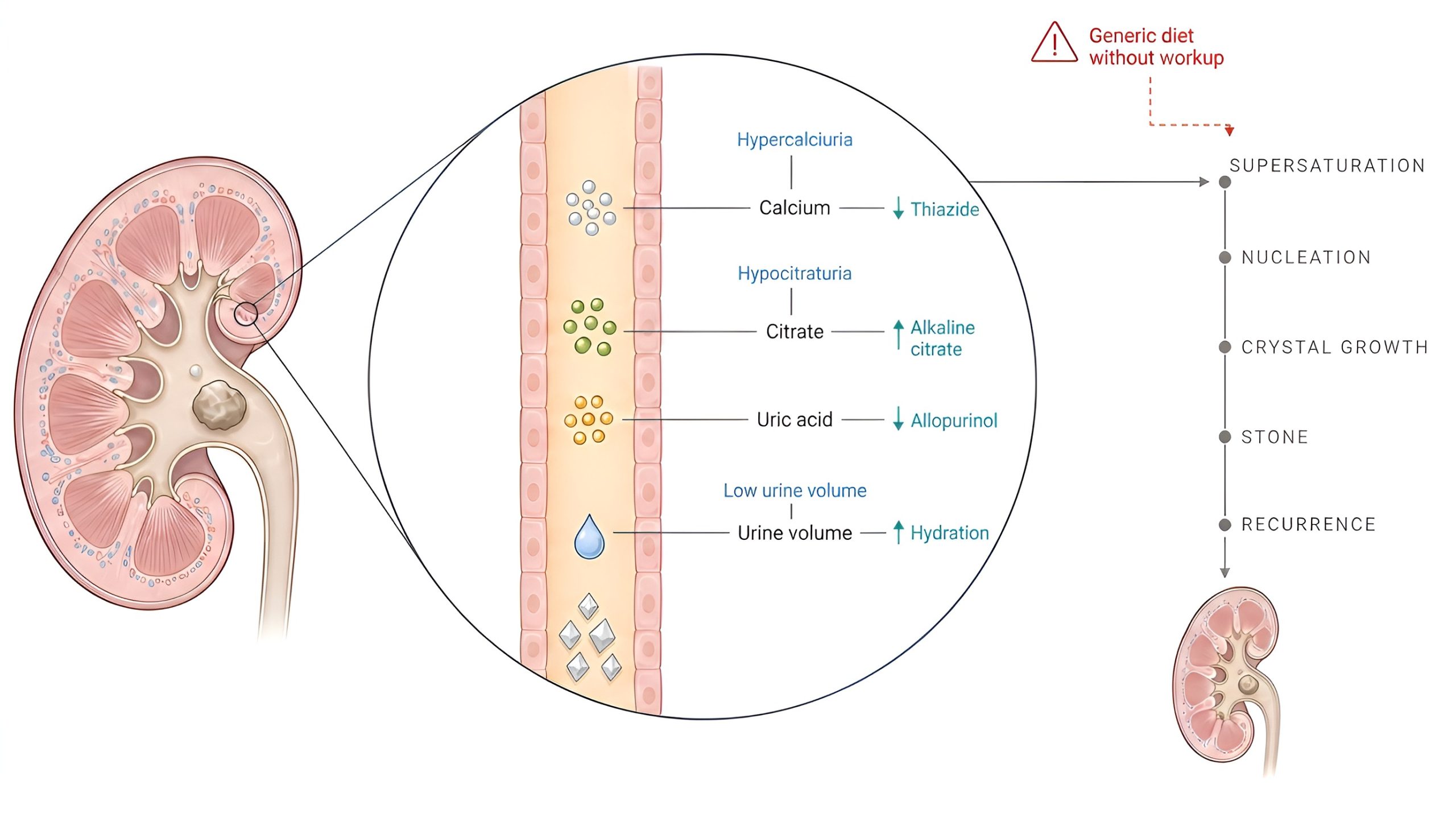
Figure 1. Urinary determinants of urinary stone recurrence and site of action of the evaluated preventive interventions. The magnification represents the lumen of a collecting duct with calcium oxalate crystals forming. Above each determinant, the abnormality associated with recurrence and the intervention that corrects it are indicated. Constitutional factors and predictive models are detailed in Table I. Source: Prepared by the authors.
Figure 2 brings both lines together on the patient: on one side, the determinants and interventions associated with lower recurrence; on the other, the factors that favour it and the only intervention with a signal of harm. It orders the evidence reviewed and does not replace current clinical practice guidelines.
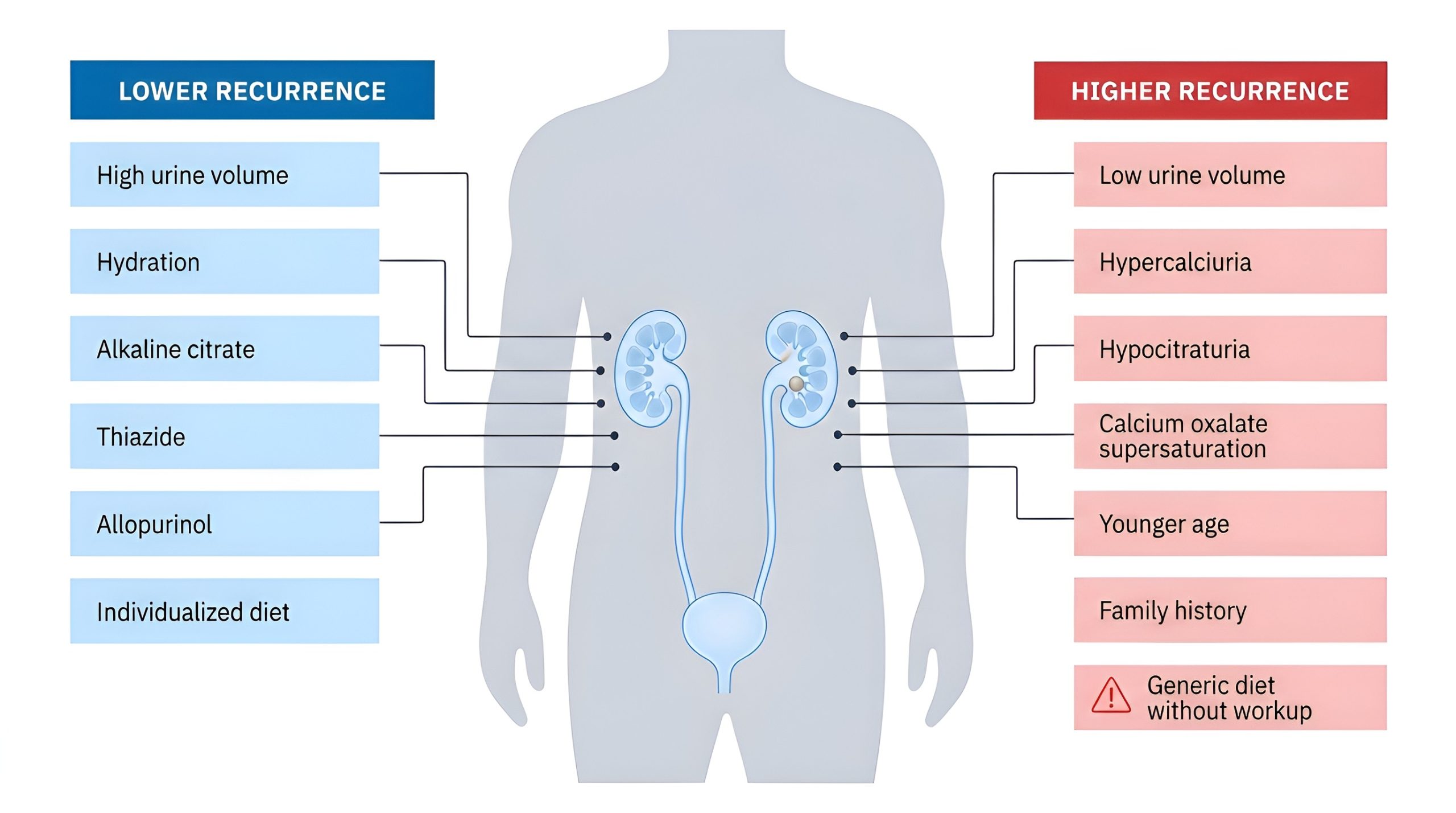
Figure 2. Balance of determinants and interventions in urinary stone recurrence: on the left those associated with lower recurrence, on the right those associated with higher recurrence. Source: Prepared by the authors.
DISCUSSION
The most robust finding of this review is also the most elementary: among all determinants evaluated, only hydration adherence showed complete concordance across studies (HR 0.32 per additional liter of urine output). The remaining metabolic factors, hypercalciuria and hypocitraturia, retain a majority but not unanimous association, and genetic burden behaves predictably only when aggregated into polygenic scores rather than isolated variants (14). This gradient matches the most recent quantitative synthesis on the topic (2), which identified age, family history, and metabolic comorbidities as independent predictors, although with modest discriminative performance when combined into predictive models (area under the curve 0.69-0.71): no single factor, nor their sum, fully explains individual risk. One detail of the corpus tempers that apparent inconsistency: the discordant study for hypercalciuria, for urinary citrate, and for family history is always the same one (11), a cohort of patients followed after a first stone episode. The discordance concentrates in a single work rather than being spread across independent studies, so the evidence on metabolic determinants is more homogeneous than the count of concordant studies suggests.
Hydration warrants separate treatment, because in its case the evidence and clinical practice point in opposite directions. It is the best-supported measure across both lines reviewed: the only factor with complete concordance among the cohorts (4-8) and, delivered as a protocol-driven intervention within a trial, it reduced new stone formation to 8.3% versus 40-55% in the untreated group (37). Against that support, one of the cohorts documents that recurrent stone formers do not increase their fluid intake despite repeated advice (7). The obstacle therefore lies not in the evidence but in adherence to it, and it differs in kind from the one affecting the other interventions: citrate, thiazides, and allopurinol raise the question of whom to prescribe them to; hydration raises that of sustaining over time a behaviour the patient already knows.
In prevention, the axis of the finding is not which intervention works best, but to whom it is directed. That match matters because the interventions are not interchangeable: they act on different urinary determinants. Thiazides and alkaline citrate both reduce urinary calcium excretion, and citrate additionally raises citraturia more than thiazide does (21); allopurinol demonstrated its benefit in stone formers with hyperuricosuria (30); and hydration acts on urine volume (5). All converge on the relative supersaturation of calcium oxalate, which is calculated from 24-hour urine composition and whose reduction is associated with lower recurrence risk (12). The head-to-head comparison between diet individualized by metabolic profile and generic diet, with recurrence of 6% versus 19% (34), suggests that the decisive variable is the match between the detected abnormality and the prescribed measure, rather than the nature of the measure itself. The comparative effectiveness review of the Agency for Healthcare Research and Quality reached a compatible conclusion (3): increased fluid intake, a diet with normal-to-high calcium and low protein and sodium, thiazides, alkali treatment, and allopurinol may reduce recurrence in adults with calcium oxalate or phosphate stones, but with certainty of evidence rated as low.
That limited certainty has a historical rather than a methodological explanation. Much of the available trial evidence comes from the 1980s and 1990s, a period preceding the standardization of prospective registration, intention-to-treat analysis, and blinded outcome assessment. The direction of effect is favourable in most cases, but the confidence that can be placed in the magnitude of those estimates is lower than would be required today. Against that background, the single trial reporting potential harm acquires relevance (35): a low-animal-protein, high-fibre diet was associated with significantly greater recurrence than advice to increase fluid intake and maintain adequate calcium intake (RR 5.6; 95% CI 1.2-26.1). An isolated result does not invalidate an entire category of intervention, but it does preclude generalizing dietary recommendations without knowing the patient’s metabolic profile.
The contribution of this review lies not in new data but in reading together two bodies of literature that are usually consulted separately. That reading yields a concrete practical consequence: the best-supported measure, hydration, requires no prior metabolic workup and does require an explicit adherence strategy, whereas pharmacological and dietary interventions show benefit only when metabolic assessment precedes prescription. Reversing that order, which is what happens when a generic dietary recommendation is handed over at discharge, may explain part of the discordance observed across the trials reviewed.
CONCLUSION
Effective prevention of urinary stone recurrence depends less on which intervention is chosen than on whether that intervention matches the patient’s metabolic profile; hydration, the only measure with consistently favourable evidence and applicable without prior workup, is limited by adherence rather than by evidence.
Limitations
The scope of this review is bounded by the selection criterion described: the works discussed do not represent the entirety of the published literature on stone recurrence, but its methodologically strongest subset. No formal risk-of-bias assessment of each study nor quantitative synthesis was performed, so the figures cited correspond to the estimates of the original studies and not to pooled estimators. Heterogeneity in recurrence definitions (symptomatic, radiographic, or by residual fragment growth), follow-up periods, and populations limits direct comparability across studies. Finally, several preventive trials predate current reporting standards, which reduces confidence in the magnitude of their estimates although not in the direction of their findings.
DECLARATIONS
Funding
This work received no funding from any public, commercial, or non-profit entity.
Conflicts of interest
The authors declare no conflicts of interest related to this work.
Data availability
As this is a narrative review based on published scientific literature, no original datasets were generated. The information used derives entirely from the bibliographic sources cited in the manuscript.
Authors’ contributions (CRediT)
PANR: Conceptualization, Methodology, Investigation, Data curation, Formal analysis, Visualization, Writing – original draft, Supervision, Project administration.
DALV: Investigation, Validation, Writing – review & editing.
LJPG: Investigation, Validation, Writing – review & editing.
JCLM: Investigation, Validation, Writing – review & editing.
JDLO: Investigation, Validation, Writing – review & editing.
JFVB: Investigation, Validation, Writing – review & editing.
- PANR: Pedro Alfonso Nieto Rodríguez.
- DALV: Daniel Alonso López Vallejo.
- LJPG: Laura Juliana Padilla García.
- JCLM: Jeanina Carolina Linero Manjarrés.
- JDLO: Julian David López Ortega.
- JFVB: Juan Felipe Valencia Betancourt.
The authors participated in the preparation of the manuscript according to the roles described by the CRediT taxonomy, critically reviewed the manuscript, approved the final version for publication, and accept responsibility for all aspects of the work in accordance with the criteria established by the International Committee of Medical Journal Editors (ICMJE).
Use of Generative Artificial Intelligence
The authors declare that the manuscript was prepared under their complete academic and scientific responsibility. The artificial intelligence tool Claude (Anthropic) was used to support linguistic correction and style review of the manuscript.
Previous publication or presentation
This work has not been previously published or presented in any medium.
Ethical considerations
As this is a narrative review of published literature and does not include data from humans or animals, ethical approval and informed consent were not applicable.
Transparency statement
The corresponding author affirms that this manuscript is an honest, accurate, and transparent report of the review conducted and that no relevant aspect of its methods or findings has been omitted.
REFERENCES
- D’Costa MR, Haley WE, Mara KC, Enders FT, Vrtiska TJ, Pais VM, et al. Symptomatic and Radiographic Manifestations of Kidney Stone Recurrence and Their Prediction by Risk Factors: A Prospective Cohort Study. Journal of the American Society of Nephrology. 2019;30(7):1251-1260. doi:10.1681/ASN.2018121241
- Ji J, Cui T, Dang K, Zhou Y, Yang Y, Chen M, et al. Risk factors for kidney stone recurrence and early prediction models: a systematic review and meta-analysis. Translational andrology and urology. 2026;15(4):104. doi:10.21037/tau-2025-1-957
- Asher GN, Viprakasit DP, Aymes SE, Lusk JB, Ross S, Baker C, et al. Prevention of Recurrent Nephrolithiasis in Adults and Children: A Systematic Review. Annals of internal medicine. 2026;179(5):696-707. doi:10.7326/ANNALS-25-04452
- Aji K, Maimaijiang M, Song G. Study on changes in urinary relative supersaturation and risk of stone recurrence in patients after urolithiasis surgery. BMC urology. 2025;25(1):258. doi:10.1186/s12894-025-01953-x
- Daudon M, Hennequin C, Boujelben G, Lacour B, Jungers P. Serial crystalluria determination and the risk of recurrence in calcium stone formers. Kidney international. 2005;67(5):1934-43. doi:10.1111/j.1523-1755.2005.00292.x
- Strauss AL, Coe FL, Deutsch L, Parks JH. Factors that predict relapse of calcium nephrolithiasis during treatment: a prospective study. The American journal of medicine. 1982;72(1):17-24. doi:10.1016/0002-9343(82)90566-6
- Bankir L, Daudon M. Poor compliance of recurrent stone formers to increase their fluid intake in spite of repeated recommendation. Clinical kidney journal. 2026;19(4):sfag051. doi:10.1093/ckj/sfag051
- Wei L, Wei F, Wu Y, Yi Y. Barriers to hydration and dietary sodium reduction for kidney stone prevention: a population-based study with 12-month clinical outcomes. Frontiers in public health. 2025;13:1721782. doi:10.3389/fpubh.2025.1721782
- Ferreira TAC, Danilovic A, Gomes SA, Vicentini FC, Marchini GS, Torricelli FCM, et al. Long-term Follow-up of Patients Undergoing Nephrectomy for Urolithiasis. Int Braz J Urol. 2025;51(1):e20240375. doi:10.1590/S1677-5538.IBJU.2024.0375
- Di Silverio F, D’Angelo AR, Gallucci M, Seccareccia F, Menotti A. Incidence and prediction of stone recurrence after lithotripsy in idiopathic calcium stone patients: a multivariate approach. European urology. 1996;29(1):41-6. doi:10.1159/000473716
- Trinchieri A, Ostini F, Nespoli R, Rovera F, Montanari E, Zanetti G. A prospective study of recurrence rate and risk factors for recurrence after a first renal stone. The Journal of urology. 1999;162(1):27-30. doi:10.1097/00005392-199907000-00007
- Ferraro PM, Ticinesi A, Meschi T, Rodgers A, Di MF, Fulignati P, et al. Short-Term Changes in Urinary Relative Supersaturation Predict Recurrence of Kidney Stones: A Tool to Guide Preventive Measures in Urolithiasis. The Journal of urology. 2018;200(5):1082-1087. doi:10.1016/j.juro.2018.06.029
- Unno R, Taguchi K, Hosier G, Usawachintachit M, Sui W, Yang H, et al. Maternal family history of urolithiasis is associated with earlier age of onset of stone disease. World journal of urology. 2023;41(1):241-247. doi:10.1007/s00345-022-04221-x
- Zhu W, Zhang X, Zhou Z, Sun Y, Zhang G, Duan X, et al. Predictive value of single-nucleotide polymorphism signature for nephrolithiasis recurrence: a 5-year prospective study. Clinical kidney journal. 2023;16(11):2205-2215. doi:10.1093/ckj/sfad119
- Hein S, Miernik A, Wilhelm K, Schlager D, Schoeb DS, Adams F, et al. Endoscopically Determined Stone Clearance Predicts Disease Recurrence Within 5 Years After Retrograde Intrarenal Surgery. Journal of endourology. 2016;30(6):644-9. doi:10.1089/end.2016.0101
- Alam N, Khan RA, Hayee S, Wahab AU, Iqbal A. Correlation Between Stone Composition and Serum Metabolic Abnormalities in Recurrent Renal Calculi. Cureus. 2025;17(11):e96535. doi:10.7759/cureus.96535
- Castiglione V, Pottel H, Lieske JC, Lukas P, Cavalier E, Delanaye P, et al. Evaluation of inactive Matrix-Gla-Protein (MGP) as a biomarker for incident and recurrent kidney stones. Journal of nephrology. 2020;33(1):101-107. doi:10.1007/s40620-019-00623-0
- Dissayabutra T, Anegkamol W, Ratchanon S, Ungjaroenwathana W, Klinhom T, Sasivongsbhakdi T, et al. Lime-based supplement reduces calcium oxalate stone recurrence: A multicenter randomized controlled trial. PloS one. 2025;20(12):e0336892. doi:10.1371/journal.pone.0336892
- Lojanapiwat B, Tanthanuch M, Pripathanont C, Ratchanon S, Srinualnad S, Taweemonkongsap T, et al. Alkaline citrate reduces stone recurrence and regrowth after shockwave lithotripsy and percutaneous nephrolithotomy. International braz j urol. 2011;37(5):611-6. doi:10.1590/s1677-55382011000500007
- Ettinger B, Pak CY, Citron JT, Thomas C, Adams-Huet B, Vangessel A. Potassium-magnesium citrate is an effective prophylaxis against recurrent calcium oxalate nephrolithiasis. The Journal of urology. 1997;158(6):2069-73. doi:10.1016/s0022-5347(01)68155-2
- Solak V, Gökce Mİ, Yaman Ö. Potassium citrate vs. hydrochlorothiazide to reduce urinary calcium excretion in calcium oxalate stone patients with hypercalciuria: a prospective randomized study. International urology and nephrology. 2021;53(9):1791-1796. doi:10.1007/s11255-021-02879-7
- Ungjaroenwathana W, Chiramongkolsiri T, Dissayabutra T, Boonla C, Prapunwattana P, Tungsanga K, et al. Lime powder regimen supplement alleviates urinary metabolic abnormalities in urolithiasis patients. Nephrology (Carlton, Vic.). 2019;24(8):791-797. doi:10.1111/nep.13493
- Hofbauer J, Höbarth K, Szabo N, Marberger M. Alkali citrate prophylaxis in idiopathic recurrent calcium oxalate urolithiasis–a prospective randomized study. British journal of urology. 1994;73(4):362-5. doi:10.1111/j.1464-410x.1994.tb07597.x
- Arrabal-Martín M, Fernández-Rodríguez A, Arrabal-Polo MA, García-Ruiz MJ, Zuluaga-Gómez A. Extracorporeal renal lithotripsy: evolution of residual lithiasis treated with thiazides. Urology. 2006;68(5):956-9. doi:10.1016/j.urology.2006.06.007
- Ettinger B, Citron JT, Livermore B, Dolman LI. Chlorthalidone reduces calcium oxalate calculous recurrence but magnesium hydroxide does not. The Journal of urology. 1988;139(4):679-84. doi:10.1016/s0022-5347(17)42599-7
- Ala-Opas M, Elomaa I, Porkka L, Alfthan O. Unprocessed bran and intermittent thiazide therapy in prevention of recurrent urinary calcium stones. Scandinavian journal of urology and nephrology. 1987;21(4):311-4. doi:10.3109/00365598709180789
- Scholz D, Schwille PO, Sigel A. Double-blind study with thiazide in recurrent calcium lithiasis. The Journal of urology. 1982;128(5):903-7. doi:10.1016/s0022-5347(17)53269-3
- Peraire M, Guimerà J, Costa-Bauzá A, Sanchís P, Grases F, Pieras E. Low-Dose Indapamide vs. Hydrochlorothiazide in Idiopathic Hypercalciuria: A Randomized Prospective Trial. J Clin Med. 2025;14(20):7426. doi:10.3390/jcm14207426
- Christe A, Primetis E, Cereghetti GM, Drakopoulos D, Dhayat NA, Bonny O, et al. Hydrochlorothiazide and Bone Mineral Density in Patients with Kidney Stones: Post Hoc Analysis of the NOSTONE Trial. Clinical journal of the American Society of Nephrology. 2025;20(5):706-718. doi:10.2215/CJN.0000000659
- Ettinger B, Tang A, Citron JT, Livermore B, Williams T. Randomized trial of allopurinol in the prevention of calcium oxalate calculi. The New England journal of medicine. 1986;315(22):1386-9. doi:10.1056/NEJM198611273152204
- Smith MJ. Placebo versus allopurinol for renal calculi. The Journal of urology. 1977;117(6):690-2. doi:10.1016/s0022-5347(17)58588-2
- Ruggenenti P, Caruso MR, Cortinovis M, Perna A, Peracchi T, Giuliano GA, et al. Fresh lemon juice supplementation for the prevention of recurrent stones in calcium oxalate nephrolithiasis: A pragmatic, prospective, randomised, open, blinded endpoint trial. EClinicalMedicine. 2022;43:101227. doi:10.1016/j.eclinm.2021.101227
- Dussol B, Iovanna C, Rotily M, Morange S, Leonetti F, Dupuy P, et al. A randomized trial of low-animal-protein or high-fiber diets for secondary prevention of calcium nephrolithiasis. Nephron. Clinical practice. 2008;110(3):c185-94. doi:10.1159/000167271
- Kocvara R, Plasgura P, Petrík A, Louzenský G, Bartonícková K, Dvorácek J. A prospective study of nonmedical prophylaxis after a first kidney stone. BJU international. 1999;84(4):393-8. doi:10.1046/j.1464-410x.1999.00216.x
- Hiatt RA, Ettinger B, Caan B, Quesenberry CP, Duncan D, Citron JT. Randomized controlled trial of a low animal protein, high fiber diet in the prevention of recurrent calcium oxalate kidney stones. American journal of epidemiology. 1996;144(1):25-33. doi:10.1093/oxfordjournals.aje.a008851
- Shuster J, Jenkins A, Logan C, Barnett T, Riehle R, Zackson D, et al. Soft drink consumption and urinary stone recurrence: a randomized prevention trial. Journal of clinical epidemiology. 1992;45(8):911-6. doi:10.1016/0895-4356(92)90074-w
- Sarica K, Inal Y, Erturhan S, Yağci F. The effect of calcium channel blockers on stone regrowth and recurrence after shock wave lithotripsy. Urological research. 2006;34(3):184-9. doi:10.1007/s00240-006-0040-x