

Hospital-acquired fever in adults: a practical diagnostic approach for clinicians
Fiebre intrahospitalaria en adultos: un enfoque diagnóstico práctico para el clínico
[Artículo en inglés/ Article in English]
Vol. 10 Núm. 4. Agosto 2026 - Octubre 2026.
e-ISSN: 2530-5468 - Open Access Journal
DOI: 10.5281/zenodo.22966429
Published under Creative Commons CC BY-NC-ND 4.0


Sanum. vol. 10, número 4 (2026) páginas 104 – 120
AUTHORS:
Juliana María Durango Velásquez¹ (0009-0006-3770-5970)
Juliana Vela Paz² (0009-0002-6563-3610)
Angelica Vargas³ (0009-0001-7122-0823)
Dilan Miguel Rebolledo Castillo¹ (0009-0007-9679-2581)
Deiber Jesús Borrego Reyes¹ (0000-0002-0146-737X)
Affiliations
¹ Faculty of Medicine, Universidad Cooperativa. Colombia.
² Faculty of Health Sciences, Universidad Icesi. Cali, Colombia.
³ Faculty of Medicine, Universidad de La Sabana. Bogotá, Colombia.
Como citar este artículo:
Durango Velásquez JM, Vela Paz J, Vargas A, Rebolledo Castillo DM, Borrego Reyes DJ. Fiebre intrahospitalaria en adultos: un enfoque diagnóstico práctico para el clínico. SANUM 2026, 10(4) pp 104 – 120. DOI: 10.5281/zenodo.22966429
© Los autores. Publicado por SANUM: Revista Científico-Sanitaria bajo una licencia Creative Commons Atribución-NoComercial-SinDerivadas 4.0 Internacional (CC BY-NC-ND 4.0). 
How to cite this article:
Durango Velásquez JM, Vela Paz J, Vargas A, Rebolledo Castillo DM, Borrego Reyes DJ. Hospital-acquired fever in adults: a practical diagnostic approach for clinicians. SANUM 2026, 10(4) pp 104 – 120. DOI: 10.5281/zenodo.22966429
© The authors. Published by SANUM: Revista Científico-Sanitaria under a Creative Commons Attribution-NonCommercial-NoDerivatives 4.0 International License (CC BY-NC-ND 4.0).
Article type: Review article.
Section: Internal Medicine.
Received: 20-07-2026.
Accepted: 10-09-2026.
Published: 30-10-2026.
ABSTRACT
Introduction: Hospital-acquired fever is a common clinical syndrome with a broad differential diagnosis that includes both infectious and non-infectious conditions. Its evaluation remains challenging because indiscriminate diagnostic testing and empirical antimicrobial therapy may increase morbidity, healthcare costs, and antimicrobial resistance. An evidence-based practical diagnostic approach for adults who develop fever during hospitalization is presented.
Methods: A narrative review was conducted using PubMed/MEDLINE, Scopus, and Google Scholar. Systematic reviews, meta-analyses, clinical practice guidelines, consensus statements, and relevant observational studies published between January 2000 and May 2026 were critically appraised and synthesized to develop a practical diagnostic framework.
Results: A stepwise diagnostic approach is proposed based on clinical stability, timing of fever onset, systematic bedside reassessment, and identification of the most likely anatomical source. The review summarizes the major infectious and non-infectious etiologies, the role of microbiological studies, imaging modalities, and biomarkers, and highlights common diagnostic pitfalls. These concepts are integrated into a practical diagnostic algorithm aimed at improving diagnostic accuracy and promoting appropriate antimicrobial use.
Conclusions: The evaluation of hospital-acquired fever should rely on clinical judgment, repeated bedside reassessment, and the judicious use of diagnostic tests. A structured diagnostic approach may improve diagnostic accuracy, reduce unnecessary investigations, and support more appropriate antimicrobial use.
KEYWORDS:
Fever;
Diagnosis, Differential;
Anti-Infective Agents;
Morbidity;
Biomarkers.
RESUMEN:
Introducción: La fiebre intrahospitalaria constituye un síndrome clínico frecuente con un amplio diagnóstico diferencial que incluye causas infecciosas y no infecciosas. Su evaluación representa un desafío clínico, ya que el uso indiscriminado de estudios diagnósticos y antimicrobianos puede incrementar la morbilidad, los costos y la presión selectiva para resistencia bacteriana. Se describe un enfoque diagnóstico práctico y basado en la evidencia para la evaluación del adulto con fiebre durante la hospitalización.
Métodos: Se realizó una revisión narrativa de la literatura mediante búsquedas en PubMed/MEDLINE, Scopus y Google Scholar. Se incluyeron revisiones sistemáticas, metaanálisis, guías de práctica clínica, documentos de consenso y estudios observacionales relevantes publicados entre enero de 2000 y mayo de 2026. La evidencia se analizó de forma crítica y se organizó para desarrollar un algoritmo diagnóstico aplicable a la práctica clínica.
Resultados: Se propone un abordaje escalonado basado en la estabilidad clínica, la cronología de la fiebre, la reevaluación clínica sistemática y la identificación del foco anatómico más probable. Se revisan las principales causas infecciosas y no infecciosas, el papel de los estudios microbiológicos, las técnicas de imagen y los biomarcadores, así como los errores diagnósticos más frecuentes. Se integra esta información en un algoritmo práctico orientado a optimizar el rendimiento diagnóstico y racionalizar la utilización de antimicrobianos.
Conclusiones: La evaluación de la fiebre intrahospitalaria debe fundamentarse en el juicio clínico, la reevaluación seriada y el uso dirigido de pruebas diagnósticas. Un enfoque estructurado permite mejorar la precisión diagnóstica, reducir estudios innecesarios y favorecer una utilización más racional de los antimicrobianos.
PALABRAS CLAVE:
Fiebre;
Diagnóstico Diferencial;
Antimicrobianos;
Morbilidad;
Biomarcadores.
INTRODUCTION:
Fever is generally defined as a body temperature ≥38.3 °C on a single measurement or ≥38.0 °C when persistent, although these thresholds may vary according to the clinical context and the site of measurement. Hospital-acquired fever refers to the development of a new febrile episode during hospitalization in a patient who was afebrile at admission. It represents a clinical syndrome with a broad differential diagnosis (1) and is one of the most common reasons for diagnostic reassessment in hospitalized patients.
The National Healthcare Safety Network (NHSN) of the Centers for Disease Control and Prevention (CDC) considers events occurring on or after the third calendar day of hospitalization, with the day of admission counted as day 1, to be hospital-acquired (2). However, some studies use a 48-hour threshold to distinguish community-acquired conditions from those developing during hospitalization (1). These definitions serve epidemiological and operational purposes but do not replace individualized clinical assessment. It is also important to distinguish hospital-acquired fever from nosocomial fever of unknown origin (nosocomial FUO), a distinct clinical syndrome defined by persistent fever without an established diagnosis despite appropriate evaluation in hospitalized patients, with different diagnostic objectives and management strategies (3), and therefore beyond the scope of this review.
In most reported series, patients who subsequently develop hospital-acquired fever were initially admitted for non-infectious conditions (68.6%), whereas only about one-third were admitted because of an infectious disease (31.4%) (4). Although infection remains the clinician’s primary concern, prospective studies have shown that infectious etiologies account for only 37% to 74% of febrile episodes, whereas 26% to 63% are ultimately attributed to non-infectious causes (1). The latter include drug reactions, thromboembolic events, postoperative inflammation, transfusion reactions, malignancies, and other inflammatory disorders (1,4).
Timely differentiation between infectious and non-infectious causes remains one of the greatest challenges in clinical practice. Diagnostic uncertainty frequently leads to the empirical use of broad-spectrum antimicrobials, even in the absence of objective evidence of infection. A systematic review showed that 29% to 55% of patients with fever ultimately attributed to non-infectious etiologies nevertheless received antibiotic therapy, with a mean treatment duration ranging from 6.6 to 9.6 days (4). Similarly, in a cohort of 730 hospitalized patients treated empirically with broad-spectrum antibiotics, 67% were afebrile at treatment initiation, 38% had a normal leukocyte count, 30% had neither fever nor leukocytosis, and 58% of all cultures ultimately yielded negative results (5).
The temporal definitions used for epidemiological surveillance do not always align with the needs of clinical reasoning. Therefore, although this review presents the operational definitions of hospital-acquired fever, it adopts a predominantly clinical perspective and addresses any new febrile episode occurring during hospitalization, from the time of admission through prolonged hospital stays, emphasizing how the timing of fever modifies the differential diagnosis and guides the diagnostic approach.
The aim of this review is to provide a practical, evidence-based approach to the evaluation of adults who develop fever during hospitalization. We propose a diagnostic strategy centered on the patient’s clinical stability, the timing of fever onset, individual risk factors, and the rational integration of clinical assessment, microbiological investigations, diagnostic imaging, and biomarkers, with the goal of optimizing clinical decision-making, improving diagnostic accuracy, and promoting appropriate antimicrobial use.
METHODS
A narrative review of the scientific literature on the diagnostic approach to and management of hospital-acquired fever in adults was conducted. A literature search was performed in the PubMed/MEDLINE, Scopus, and Google Scholar databases, including publications from January 2000 through May 2026. Combinations of MeSH and DeCS terms related to hospital-acquired fever, nosocomial fever, fever in hospitalized patients, healthcare-associated infection, drug fever, fever of unknown origin, diagnostic approach, biomarkers, critical care, antimicrobial stewardship, and their Spanish equivalents were used with Boolean operators (AND, OR). Systematic reviews, meta-analyses, clinical practice guidelines, consensus statements, and relevant observational studies were prioritized based on their methodological quality and clinical relevance. The retrieved evidence was critically appraised and thematically organized to develop a practical, evidence-based approach aimed at supporting clinical decision-making.
RESULTS
- Initial bedside assessment: the six essential questions
The initial evaluation of a patient with hospital-acquired fever should be systematic and guided by clinical probability, avoiding both the indiscriminate use of diagnostic tests and the empirical initiation of antimicrobial therapy in the absence of a reasonable diagnostic hypothesis (6). Before determining the appropriate diagnostic workup or treatment, clinicians should answer six essential questions that help guide the differential diagnosis, prioritize high-yield investigations, and promptly identify patients requiring immediate intervention.
1.1. When did the fever begin?
The timing of fever onset is one of the first elements of clinical reasoning because it modifies the pretest probability of different etiologies (1). Fever should be interpreted in relation to the day of hospitalization, recent invasive procedures, surgical interventions, initiation of new medications, and the temporal pattern of fever (persistent or recurrent) (7). In general, febrile episodes occurring during the first days of hospitalization are more commonly related to inflammatory responses associated with the underlying disease, surgical trauma, invasive procedures, or medications, whereas fever developing after a prolonged hospital stay increases the likelihood of healthcare-associated infections (8). Recognizing this temporal evolution helps place the febrile episode into clinical context, refine the differential diagnosis, and prioritize the diagnostic evaluation.
1.2. Where is the most likely source of fever?
The physical examination is the cornerstone of the initial evaluation and should be performed systematically to identify the most likely anatomical source of fever, whether infectious or non-infectious (3). The examination should integrate the clinical context, recent medical history, and individual risk factors while carefully evaluating surgical wounds, skin, abdomen, chest, extremities, oral cavity, paranasal sinuses in intubated patients, and the insertion sites of invasive devices (6). The absence of localizing findings neither excludes infection nor confirms an alternative diagnosis; therefore, clinical findings should guide, rather than replace, further diagnostic investigations.
1.3. What has changed recently?
Many episodes of hospital-acquired fever can be explained by events occurring during the preceding 24–72 hours. The evaluation should systematically review the introduction of new medications, invasive procedures, surgical interventions, blood transfusions, insertion or manipulation of intravascular devices, mechanical ventilation, parenteral nutrition, and any other relevant changes in the patient’s clinical course (4,9). In many cases, this chronological review allows identification of the underlying cause of fever before additional diagnostic investigations are requested.
1.4. Who is the host?
Host characteristics determine the risk of infection, the spectrum of expected pathogens, and the likelihood of non-infectious causes (10). Recent major surgery, immunosuppression, neutropenia, solid organ transplantation, HIV infection, hematologic malignancies, diabetes mellitus, cirrhosis, or admission to an intensive care unit substantially modify the differential diagnosis (11) and should be considered from the outset of the evaluation.
1.5. Which invasive devices does the patient have?
Every invasive device represents a potential source of fever and influences the spectrum of likely etiologies. The initial evaluation should include a systematic assessment of central and peripheral venous catheters, urinary catheters, endotracheal tubes, surgical drains, prosthetic devices, cardiovascular devices, and other invasive medical devices (6). In addition to increasing the risk of infection, these devices may also be associated with non-infectious complications, such as thrombosis or local inflammatory reactions, which should likewise be considered in the differential diagnosis (12).
1.6. Which microorganisms are most likely?
Before obtaining cultures or initiating antimicrobial therapy, it is essential to determine the pathogens that are most likely according to the clinical context. The expected microbiology depends on the anatomical site involved, the duration of hospitalization, recent antimicrobial exposure, local epidemiology, prior colonization, and host characteristics (13). This approach allows rational selection of microbiological investigations and supports more appropriate empirical antimicrobial therapy when indicated.
- Diagnostic clues according to timing of fever onset
As previously discussed, the timing of fever is one of the main determinants of the differential diagnosis of hospital-acquired fever. From a practical standpoint, the temporal pattern allows clinicians to distinguish four scenarios with different diagnostic implications: early fever, late fever, persistent fever, and recurrent fever.
2.1. Early fever: a common physiological response, but not exclusively
Most episodes of fever occurring during the first 48–72 hours of hospitalization, particularly after major surgery, represent a physiological inflammatory response to tissue injury rather than an infectious complication. Surgical trauma triggers a systemic inflammatory response characterized by activation of macrophages, endothelial cells, and other components of the reticuloendothelial system, leading to the release of pro-inflammatory cytokines (8). The principal mediators include interleukin-1 (IL-1), interleukin-6 (IL-6), tumor necrosis factor-alpha (TNF-α), and interferon-gamma (IFN-γ), which stimulate prostaglandin E₂ synthesis within the preoptic area of the hypothalamus, thereby raising the thermoregulatory set point and inducing fever (14). This response is part of the normal tissue repair process and, by itself, does not imply the presence of infection.
The magnitude of this inflammatory response correlates with the degree of tissue injury; consequently, fever is more common after major surgical procedures than after minimally invasive interventions (8). Among the cytokines involved, IL-6 has shown the strongest correlation with both the intensity and duration of fever during the early postoperative period, particularly following cardiovascular surgery, highlighting its role as one of the principal mediators of the acute inflammatory response (15).
Although inflammatory causes related to surgical trauma predominate during the first 48 hours after surgery, clinicians should maintain a high index of suspicion for potentially life-threatening complications when the clinical course is unfavorable (8). These include pulmonary aspiration, acute adrenal insufficiency, transfusion reactions, drug-induced fever, thyroid storm in predisposed patients, and, less commonly, fulminant infections such as clostridial myonecrosis or necrotizing fascitis (16,17).
Finally, it is important to emphasize that although atelectasis has traditionally been regarded as one of the leading causes of early postoperative fever, the available evidence does not support a consistent causal association between these two conditions (18). Consequently, isolated atelectasis should not be considered a sufficient explanation for a febrile episode or should it delay the investigation of alternative diagnoses when the clinical context suggests otherwise.
2.2. Late fever: increasing likelihood of healthcare-associated infection
As the duration of hospitalization increases, the etiologic spectrum of fever progressively shifts because of the accumulation of healthcare-related risk factors (1,4). Continuous exposure to invasive devices, repeated procedures, broad-spectrum antimicrobials, and hospital microorganisms promotes colonization by potentially resistant pathogens and increases the risk of healthcare-associated infections. Simultaneously, the severity of the underlying disease and disruption of the host’s anatomical and immunological barriers further increase susceptibility to these infections (19). From a pathophysiological perspective, the development of a healthcare-associated infection usually requires the convergence of two processes: a host with impaired defenses and colonization by potentially pathogenic microorganisms, either through endogenous selection or cross-transmission within the hospital environment. The coexistence of these mechanisms explains the progressive increase in infection risk as hospitalization advances and the transition from predominantly community-acquired microbiology to pathogens characteristic of the healthcare setting (19).
Several studies have shown that the onset of fever after ten days of hospitalization is associated with an almost fourfold increase in the likelihood of bacterial infection (OR 3.98). Likewise, the concomitant presence of diabetes mellitus, a maximum temperature >38.7 °C, and leukocytosis >10 × 10⁹/L independently increases the probability of an infectious etiology (7). Similarly, prolonged exposure to invasive devices is one of the main determinants of nosocomial infection (6). The use of central venous catheters has been associated with more than a twelvefold increase in infection risk (OR 12.4), while mechanical ventilation confers a comparable increase in risk (OR 12.95). The duration of exposure to these devices is directly related to the development of healthcare-associated infections (20).
Cumulative exposure to antimicrobials represents another major determinant of late-onset fever. In addition to selecting multidrug-resistant microorganisms, antibiotics alter the normal host microbiota and promote colonization by opportunistic pathogens through selective pressure (21). Previous antibiotic exposure has been associated with more than a sixfold increase in the risk of nosocomial infection (OR 6.64), with cephalosporins, carbapenems, and combination regimens being among the antimicrobial classes most consistently associated with this phenomenon. This exposure is also one of the main risk factors for Clostridioides difficile infection, extended-spectrum β-lactamase-producing Gram-negative bacilli, vancomycin-resistant enterococci, and invasive candidiasis (21,22).
As a result of these changes, the differential diagnosis also evolves. Beyond the first 48–72 hours of hospitalization, the likelihood of hospital-acquired pneumonia or ventilator-associated pneumonia, catheter-associated urinary tract infection, surgical site infection, catheter-related bloodstream infection, and venous thromboembolism progressively increases (20). Nevertheless, late-onset fever does not necessarily indicate infection. Drug fever, thromboembolic complications, acalculous cholecystitis, pancreatitis, inflammatory diseases, and several endocrine disorders remain important differential diagnoses and should be considered when the initial evaluation fails to identify an obvious infectious source (8).
2.3. Persistent fever
Persistent fever despite an appropriate initial evaluation should prompt not only expansion of the differential diagnosis but also reconsideration of the initial diagnostic hypothesis. In this setting, clinicians should reassess for occult infectious foci, device-related complications, deep-seated infections, or inadequate source control, while also considering frequently overlooked non-infectious causes (3). Persistent fever should also trigger a comprehensive reassessment of the patient’s history, physical examination, and previous investigations, as new diagnostic clues may emerge during hospitalization.
2.4. Recurrent fever
Likewise, recurrent fever should be distinguished from incomplete resolution of a previous infectious episode. The presence of well-defined afebrile intervals should prompt reconsideration of the initial diagnosis and evaluation for conditions characterized by episodic or fluctuating clinical courses (3). Although this pattern shares some features with fever of unknown origin, its interpretation should always be considered within the context of hospitalization and the interventions the patient has undergone (23).
Table I summarizes the temporal patterns of hospital-acquired fever, the predominant etiologies, key clinical clues, and the main diagnostic considerations.
| Temporal pattern | Predominant etiologies | Clinical clues | Diagnostic considerations |
| Early fever (<48–72 h) | Inflammatory response to surgical trauma, underlying disease, invasive procedures, transfusion reactions, drug fever. Less commonly: aspiration, acute adrenal insufficiency, thyroid storm, necrotizing infections. | Temporal relationship with recent surgery or invasive procedures. Most patients remain clinically stable without evidence of deterioration. | Most cases represent a physiological inflammatory response. In clinically stable patients, extensive diagnostic evaluation and empirical antibiotics are usually unnecessary. Isolated atelectasis should not be considered the cause of fever. |
| Late fever (>48–72 h; progressively increasing risk after 5–10 days) | Hospital-acquired pneumonia or ventilator-associated pneumonia, catheter-associated urinary tract infection, surgical site infection, catheter-related bloodstream infection, Clostridioides difficile infection, deep abscesses, candidemia. Also: drug fever, venous thromboembolism, pancreatitis, acalculous cholecystitis. | Prolonged hospitalization, exposure to invasive devices, broad-spectrum antibiotics, repeated procedures, intensive care unit stay. | The likelihood of infection increases progressively (OR ≈ 3.98 after 10 days). Consider multidrug-resistant pathogens and systematically evaluate all invasive devices. |
| Persistent fever | Deep-seated infections (abscesses, endocarditis, device-related infection, septic thrombophlebitis, C. difficile infection), inadequate source control, postoperative complications (anastomotic leak, fistulas, hematomas). Non-infectious causes: venous thromboembolism, drug fever, acalculous cholecystitis, central fever, inflammatory diseases, malignancy. | Persistence despite an appropriate initial evaluation or apparently adequate treatment. Lack of the expected clinical response. | Requires reconsideration of the initial diagnostic hypothesis, repeated history and physical examination, reassessment of source control, and consideration of advanced imaging (CT or FDG PET/CT) or targeted tissue biopsy when conventional evaluation is unrevealing. |
| Recurrent fever | Endocarditis, partially treated infections, malaria, brucellosis, relapsing fever due to Borrelia, visceral leishmaniasis, autoinflammatory diseases, malignancies, intermittent drug fever. | Distinct febrile episodes separated by completely afebrile intervals. The temporal pattern is reproducible or episodic. | Should be distinguished from incomplete resolution of an infection. Requires careful reconstruction of the temporal pattern, assessment of epidemiological exposures, and consideration of diseases with cyclic or autoinflammatory behavior. |
Table I. Diagnostic implications of the temporal pattern of hospital-acquired fever. Source: Prepared by the authors.
- Etiologies of hospital-acquired fever
Once the temporal pattern of the febrile episode has been established, the next step is to identify the most likely etiologies according to the clinical context. Although the definitive diagnosis often requires microbiological studies, imaging, or additional diagnostic procedures, organizing the differential diagnosis according to the anatomical source of infection and the pathophysiological mechanisms underlying non-infectious causes facilitate clinical reasoning and help prioritize the most likely diagnostic hypotheses.
3.1. Infectious causes
Infectious diseases represent one of the major etiologic groups of hospital-acquired fever and should be considered systematically because of the prognostic and therapeutic consequences of delayed diagnosis (6). However, their frequency varies considerably across different hospitalized populations, and a substantial proportion of febrile episodes are ultimately attributable to non-infectious causes (1,4,7). From a practical perspective, organizing infectious etiologies according to the anatomical site involved facilitates clinical reasoning, guides the selection of appropriate microbiological investigations, and contributes to a more rational empirical antimicrobial strategy when indicated. Table II summarizes the principal infectious causes of hospital-acquired fever according to the most likely anatomical source.
| Source | Representative conditions |
| Respiratory | Hospital-acquired pneumonia, ventilator-associated pneumonia, aspiration pneumonia, empyema |
| Bloodstream / Vascular devices | Central Line-Associated Bloodstream Infection, septic thrombophlebitis, infective endocarditis |
| Urinary tract | Catheter-associated urinary tract infection, pyelonephritis, prostatitis |
| Surgical / Soft tissues | Surgical site infection, necrotizing soft tissue infection, infected hematoma |
| Intra-abdominal | Anastomotic leak, intra-abdominal abscess, cholangitis, infected pancreatitis |
| Gastrointestinal | Clostridioides difficile, neutropenic enterocolitis |
| Central nervous system | Meningitis, ventriculitis, brain abscess |
| Opportunistic infections | Candidemia, invasive aspergillosis, CMV disease, endemic mycoses (selected hosts) |
Table II. Infectious causes of hospital-acquired fever according to the most likely source. Source: Prepared by the authors.
3.2. Non-infectious causes
Non-infectious conditions account for between one-quarter and more than one-half of episodes of hospital-acquired fever, depending on the population studied, and are particularly common among critically ill and postoperative patients (1,4,7). Recognizing these conditions is essential to avoid unnecessary antimicrobial use, reduce low-yield diagnostic testing, and ensure timely treatment of potentially serious disorders. From a practical standpoint, these conditions can be classified according to their predominant pathophysiological mechanism, an approach that facilitates their integration into the diagnostic reasoning process and reduces the risk of overlooking clinically relevant diagnoses. Table 3 summarizes the principal non-infectious causes of hospital-acquired fever according to their pathophysiological mechanism.
| Mechanism | Representative conditions |
| Inflammatory / tissue injury | Early postoperative inflammatory response, pancreatitis, Dressler syndrome, cytokine release syndrome |
| Drug-related | Drug fever, Jarisch–Herxheimer reaction, immune reconstitution inflammatory syndrome (IRIS) |
| Thromboembolic | Deep vein thrombosis, pulmonary embolism, fat embolism |
| Neurologic | Central fever, intracranial hemorrhage, ischemic stroke, non-convulsive status epilepticus |
| Endocrine / metabolic | Adrenal insufficiency, thyroid storm, tumor lysis syndrome |
| Transfusion-related | Febrile non-hemolytic transfusion reaction, hemolytic transfusion reaction |
| Autoimmune / inflammatory | Vasculitis, crystal arthritis (gout), connective tissue diseases |
| Transplant-related | Acute rejection, graft-versus-host disease |
| Withdrawal syndromes | Alcohol, benzodiazepines, opioids, barbiturates |
| Miscellaneous | Malignant hyperthermia, heterotopic ossification |
Table III. Non-infectious causes of hospital-acquired fever according to pathophysiologic mechanism. Source: Prepared by the authors.
- Diagnostic workup
4.1. Clinical reassessment: the cornerstone of evaluation
The diagnostic evaluation of hospital-acquired fever should begin with a systematic clinical reassessment before ordering additional diagnostic tests or broadening antimicrobial coverage. Repeated history-taking and physical examination, together with the complete blood count, are the only components that have achieved universal consensus in the evaluation of hospital-acquired fever (6), underscoring that clinical judgment remains the primary determinant of subsequent diagnostic investigations.
The clinical history should reconstruct the patient’s hospital course chronologically, from admission to the onset of fever, integrating the underlying disease, clinical progression, recent procedures, invasive devices, medication changes, particularly antimicrobial therapy, blood transfusions, previous microbiological results, and the development of new symptoms or signs (24). In many cases, this reassessment allows clinicians to reconsider the initial diagnostic hypothesis and guide targeted investigations before initiating an indiscriminate diagnostic workup.
The physical examination should be repeated systematically and directed by the clinical context, as new findings may emerge during hospitalization and substantially modify the differential diagnosis. Evaluation should begin with careful inspection of the skin and soft tissues, looking for erythema, induration, fluctuance, purulent drainage, or necrosis at surgical wounds and vascular catheter insertion sites, as well as pressure injuries, superficial thrombophlebitis, skin manifestations suggestive of drug reactions, or cutaneous signs of disseminated infection (25,26).
Examination of the head and neck should include inspection of the oral cavity and oropharynx for candidiasis, ulcerative lesions, or odontogenic infections, as well as palpation of the paranasal sinuses in patients with prolonged intubation or suspected nosocomial sinusitis (27). Lymphadenopathy should be assessed, and when infective endocarditis or candidemia is suspected, ophthalmologic examination may reveal findings suggestive of septic embolization or endophthalmitis (28).
Cardiovascular examination should focus on identifying new cardiac murmurs suggestive of infective endocarditis, signs of heart failure, abnormalities of peripheral perfusion, and findings suggestive of venous thromboembolic disease, such as unilateral limb swelling or calf tenderness (6).
Respiratory evaluation should assess respiratory rate and breathing pattern, use of accessory muscles, and the presence of crackles, diminished breath sounds, or signs of consolidation suggestive of pneumonia or pleural effusion (29).
Abdominal examination should include assessment for localized tenderness, guarding, peritoneal irritation, abdominal masses, hepatomegaly, splenomegaly, or ascites. In postoperative patients, careful inspection of surgical wounds is particularly important, and complications such as abscesses, hematomas, anastomotic leaks, or acalculous cholecystitis should be considered (8).
Genitourinary examination should assess signs of complicated urinary tract infection, costovertebral angle tenderness, and abnormalities at urinary catheter insertion sites (30). When clinically indicated, examination of the perineal and perirectal regions should also be performed.
Neurological evaluation should include assessment of mental status, focal neurological deficits, and signs of meningeal irritation. In patients with acute brain injury, central fever should be considered in the differential diagnosis (31).
Finally, musculoskeletal examination should focus on identifying septic arthritis or crystal-induced arthritis by assessing for warm, tender, or swollen joints with effusion, as well as localized vertebral tenderness suggestive of spondylodiscitis or spinal epidural abscess (28).
4.2. Initial laboratory evaluation
Laboratory tests should be requested selectively and always interpreted within the clinical context, as none has sufficient diagnostic accuracy to independently confirm or exclude infection. Their primary role is to identify organ dysfunction, guide the differential diagnosis, assess disease severity, and monitor the response to treatment.
A complete blood count is one of the few laboratory tests that has achieved universal consensus in the initial evaluation of hospital-acquired fever. Leukocytosis, left shift, neutropenia, eosinophilia, or thrombocytopenia may suggest different etiologies; however, none of these findings reliably distinguish infectious from non-infectious causes (24). Likewise, anemia or thrombocytopenia may suggest hematologic disorders, disseminated infections, or sepsis-related complications (32).
The initial laboratory evaluation should also include renal function, serum electrolytes, and liver function tests (24), as these investigations help identify infection-related organ dysfunction, provide diagnostic clues, and optimize the subsequent use of potentially nephrotoxic or hepatotoxic antimicrobial agents.
Serum lactate measurement is particularly useful in patients with suspected sepsis or tissue hypoperfusion because of its prognostic value and its ability to identify patients requiring immediate resuscitation. However, a normal lactate level does not exclude severe infection (32).
4.3. Microbiological studies: obtaining meaningful cultures
Microbiological investigations are essential for confirming the etiology of hospital-acquired fever, identifying the causative pathogen, and guiding targeted antimicrobial therapy (6). However, their diagnostic yield depends largely on appropriate specimen selection, timing of collection, and the pretest probability of infection. Indiscriminate culture collection in the absence of a reasonable clinical suspicion increases the likelihood of contaminant isolates, results that are difficult to interpret, and unnecessary antimicrobial treatment (33).
Whenever the patient’s clinical condition permits, microbiological specimens should be obtained before initiating or modifying antimicrobial therapy, provided this does not delay treatment in patients with suspected sepsis or septic shock (32). Specimen selection should be guided by the clinical history, physical examination, and the most likely anatomical source of infection, avoiding routine cultures in the absence of a specific clinical indication.
Blood cultures are the most valuable microbiological test when bacteremia or endovascular infection is suspected; however, they should not be obtained routinely for every episode of hospital-acquired fever. Their indication should be based on the pretest probability of bacteremia and the patient’s clinical context. Blood cultures should be obtained routinely in patients with a high probability (>50%) of bacteremia, including those with septic shock, suspected infective endocarditis or other endovascular infections, meningitis, necrotizing skin and soft tissue infections, severe intra-abdominal infections, or systemic infection in asplenic patients. They are also appropriate in patients with an intermediate probability of bacteremia when cultures from the primary site of infection cannot be obtained before antimicrobial therapy or when empirical treatment cannot be delayed. In contrast, isolated fever, leukocytosis, or a localized infection without evidence of systemic involvement are not, by themselves, indications for obtaining blood cultures, as none of these findings reliably predicts bacteremia (34).
When indicated, current guidelines recommend obtaining at least two sets of blood cultures from separate venipuncture sites, preferably before antimicrobial therapy is initiated (32). In patients with suspected central venous catheter-related infection, simultaneous cultures should be obtained from the catheter and a peripheral vein to calculate the differential time to positivity, a strategy that improves diagnostic accuracy. In patients with multilumen catheters, specimens should be obtained from at least two lumens whenever feasible, thereby increasing diagnostic yield without replacing peripheral blood cultures (6,35).
Urine cultures should be reserved for patients with urinary symptoms, pyuria, or clinical suspicion of urinary tract infection. In patients with indwelling urinary catheters, specimens should be collected after catheter replacement rather than from the existing catheter in order to reduce contamination by colonizing microorganisms and improve microbiological interpretation (6).
Respiratory specimens should be obtained only when lower respiratory tract infection is suspected (6). Depending on the clinical scenario, these may include expectorated sputum, endotracheal aspirates, bronchoalveolar lavage, or protected bronchoscopic specimens. Interpretation of respiratory cultures should always be integrated with the clinical presentation and radiologic findings because of the high prevalence of respiratory tract colonization among hospitalized patients, particularly those receiving mechanical ventilation (29).
Cultures of surgical wounds, drains, fluid collections, or normally sterile body fluids should be obtained only when there are clinical findings suggestive of infection. Conversely, routine culture of surgical drains, removed catheter tips, or superficial secretions in the absence of clinical evidence of infection has a low diagnostic yield and is not routinely recommended (36).
Multiplex molecular assays (multiplex PCR) have transformed the microbiological diagnosis of hospital-acquired infections by enabling rapid identification of microorganisms and, in some cases, antimicrobial resistance genes directly from clinical specimens or positive blood cultures. Compared with conventional methods, these assays reduce the time to microbiological identification from 48–96 hours to approximately 1.5–8 hours, facilitating earlier therapeutic decisions, particularly in critically ill patients (37).
Their greatest clinical utility has been demonstrated in three scenarios. The first is bacteremia, where multiplex assays performed on positive blood cultures identify pathogens and resistance determinants with sensitivities approaching 97% and specificities close to 100%, facilitating both early escalation for resistant pathogens and de-escalation when susceptible organisms are identified (37). The second is hospital-acquired pneumonia and ventilator-associated pneumonia, where multiplex respiratory panels provide a higher diagnostic yield than conventional cultures, particularly in patients who have already received antimicrobial therapy (37,38). Finally, these techniques are especially useful in immunocompromised patients, those with neutropenia, or patients with suspected infections caused by fastidious microorganisms, in whom early microbiological diagnosis may substantially alter therapeutic management (37).
Nevertheless, molecular test results should always be interpreted within the clinical context. Detection of microbial DNA does not reliably distinguish colonization from active infection, particularly in respiratory specimens, nor does it provide a complete antimicrobial susceptibility profile (37). Furthermore, a negative result does not exclude all potential pathogens, whereas a positive result may reflect nonviable microorganisms or previous colonization. For these reasons, molecular assays complement rather than replace conventional cultures, which remain indispensable for confirming the diagnosis and performing antimicrobial susceptibility testing.
Available evidence suggests that the greatest clinical benefit of these assays is achieved when their results are integrated into antimicrobial stewardship programs. Their principal advantage lies in reducing the time to appropriate therapy and facilitating early antimicrobial de-escalation rather than independently reducing mortality or the overall duration of antibiotic therapy (37).
Similarly, testing for Clostridioides difficile should be limited to patients with clinically significant diarrhea and compatible risk factors, avoiding testing in asymptomatic individuals, who are more likely to represent colonization rather than active infection (39).
4.4. Imaging studies: a targeted approach
Imaging studies should be requested to address a specific clinical hypothesis rather than as part of the routine evaluation of every patient with hospital-acquired fever. The imaging modality should be selected according to the suspected organ system, the patient’s clinical stability, and the pretest probability of disease. In the absence of localizing clinical findings, indiscriminate imaging increases incidental findings and rarely improves diagnostic yield.
Respiratory system. Chest radiography remains the initial imaging study in patients with suspected respiratory infection, particularly when cough, hypoxemia, increased respiratory secretions, abnormal lung auscultation, or respiratory deterioration are present. In critically ill patients or when chest radiographs are inconclusive, chest computed tomography (CT) can identify consolidations, abscesses, empyema, or complications not evident on conventional radiography. Lung ultrasound is a useful bedside alternative for detecting pulmonary consolidations and pleural effusions when adequate expertise is available (6).
Abdominal and pelvic system. Abdominal ultrasound is the initial imaging modality in patients with abdominal pain, abnormal liver function tests, or suspected acalculous cholecystitis, cholangitis, or hepatic abscesses. Contrast-enhanced CT is the imaging modality of choice for identifying intra-abdominal collections, anastomotic leaks, complicated pancreatitis, bowel perforation, and other deep postoperative complications (6).
Cardiovascular system and intravascular devices. Echocardiography should be considered in patients with persistent bacteremia, positive blood cultures for Staphylococcus aureus or Enterococcus spp., suspected infective endocarditis, or intracardiac devices (28). Venous Doppler ultrasonography is indicated when deep vein thrombosis is clinically suspected.
Central nervous system and musculoskeletal system. CT or magnetic resonance imaging (MRI) should be reserved for patients with focal neurological deficits, altered mental status, or suspected brain abscess, spondylodiscitis, osteomyelitis, or spinal epidural abscess (40). Similarly, musculoskeletal ultrasound may facilitate the identification of joint effusions amenable to arthrocentesis.
Advanced imaging techniques. When fever persists despite a negative conventional evaluation and there remains a high suspicion of infection or inflammation, ^18F-fluorodeoxyglucose positron emission tomography/computed tomography (^18F-FDG PET/CT) may help localize deep-seated infections, vascular infections, infected prosthetic devices, or occult malignancies, particularly in patients with prolonged fever without an established diagnosis (41,42).
- Biomarkers in clinical decision-making
Biomarkers are complementary tools in the evaluation of hospital-acquired fever; however, none has sufficient diagnostic accuracy to independently confirm or exclude infection. Their interpretation should always be integrated with the clinical history, physical examination, microbiological studies, and imaging findings. Their principal role is to modify the clinical probability of infection, monitor the response to treatment, and support antimicrobial-related decisions rather than establish a definitive diagnosis.
Procalcitonin
Procalcitonin (PCT) is the biomarker with the greatest utility in supporting the evaluation of suspected bacterial infection. The Society of Critical Care Medicine and the Infectious Diseases Society of America recommend its use only as an adjunct to clinical assessment in patients with a low or intermediate probability of bacterial infection. In contrast, in patients with a high clinical suspicion of infection, PCT should not be used to delay initiation of antimicrobial therapy or to exclude infection (6). Its main clinical value lies in monitoring treatment response and supporting antimicrobial de-escalation, as it is more specific than C-reactive protein for bacterial infection.
C-reactive protein
C-reactive protein (CRP) is a widely available acute-phase reactant but has limited specificity because it increases in both infectious and numerous non-infectious inflammatory conditions. Consequently, a single measurement has limited diagnostic value, whereas serial measurements are primarily useful for monitoring the inflammatory response over time. Overall, PCT has a greater ability to distinguish bacterial infection from other causes of inflammation (43).
Biomarkers for selected pathogens
Some biomarkers are useful only in specific clinical settings and should not be requested as part of the routine evaluation of hospital-acquired fever. These include β-D-glucan and galactomannan for suspected invasive fungal infections, cryptococcal antigen, urinary Histoplasma antigen in endemic areas, and cytomegalovirus PCR in immunocompromised patients (44). These tests should always be interpreted in conjunction with the epidemiological context, the patient’s immune status, and the microbiological and imaging findings, as an isolated positive or negative result rarely establishes the diagnosis.
Biomarkers should be regarded as tools that support clinical decision-making rather than substitutes for clinical judgment. Their greatest value lies in modifying the probability of infection when diagnostic uncertainty exists and in promoting more rational antimicrobial use.
- Practical diagnostic algorithm
To facilitate the practical application of the concepts discussed throughout this review, Figure 1 summarizes a stepwise diagnostic approach to adults who develop new-onset fever during hospitalization. The algorithm integrates assessment of clinical stability, bedside reassessment, interpretation of the temporal pattern of fever, identification of the most likely anatomical source, and the rational use of laboratory tests, microbiological studies, imaging, and biomarkers. It is intended to support clinical reasoning and should be adapted to the patient’s clinical condition and local epidemiology.
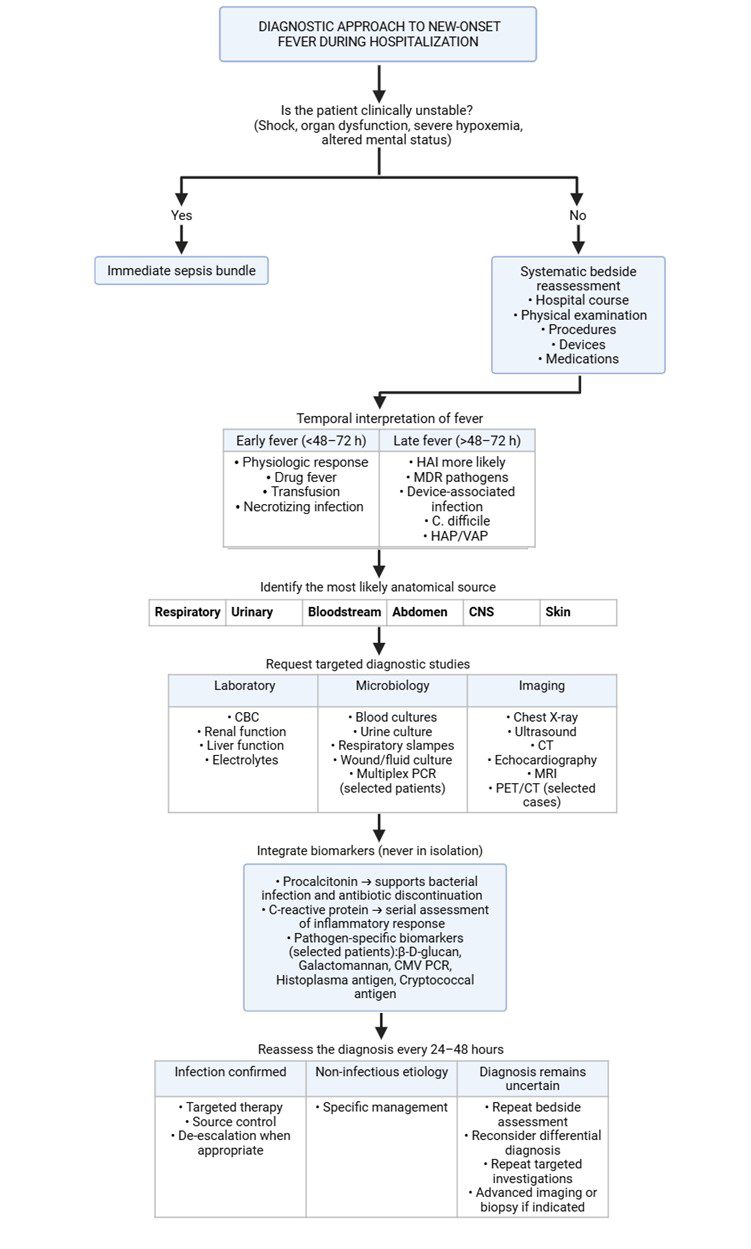
Figure 1. Practical diagnostic algorithm for the evaluation of adults with new-onset fever during hospitalization. Source: Prepared by the authors.
DISCUSSION
Hospital-acquired fever remains one of the greatest diagnostic challenges in clinical practice because it represents a clinical syndrome with numerous infectious and non-infectious etiologies. Throughout hospitalization, the probability of different causes changes according to the patient’s clinical course, procedures performed, exposure to invasive devices, antimicrobial therapy, and other therapeutic interventions. In this context, no single clinical finding, biomarker, or diagnostic test has sufficient accuracy to independently establish or exclude the diagnosis.
This review proposes a sequential diagnostic approach based on repeated clinical reassessment, interpretation of the timing of fever onset, and the rational use of laboratory tests, microbiological studies, biomarkers, and imaging. Such an approach helps prioritize the most likely diagnostic hypotheses, facilitates early recognition of non-infectious causes, and reduces the unnecessary use of diagnostic investigations and antimicrobial therapy.
Common diagnostic pitfalls in hospital-acquired fever
- Assuming that every episode of fever is caused by an infection.
- Initiating empirical antimicrobial therapy before adequate clinical reassessment, except in patients with suspected sepsis or septic shock.
- Ordering blood cultures or other microbiological cultures routinely without a specific clinical indication.
- Requesting imaging studies without a clear diagnostic hypothesis.
- Attributing early postoperative fever solely to atelectasis.
- Failing to review recently introduced medications as a potential cause of fever.
- Omitting systematic inspection of invasive devices, surgical wounds, and pressure ulcers during each clinical reassessment.
- Interpreting C-reactive protein or procalcitonin in isolation, without considering the clinical context.
- Prematurely excluding non-infectious causes after negative microbiological studies.
- Basing diagnostic decisions on a single clinical assessment rather than performing repeated bedside reassessments.
CONCLUSIONS
Hospital-acquired fever is a clinical syndrome with a broad differential diagnosis and should not be considered synonymous with infection. Its evaluation requires a structured approach that integrates the timing of fever onset, repeated clinical reassessment, host characteristics, and the rational use of laboratory tests, microbiological studies, biomarkers, and imaging. Selecting diagnostic investigations according to the clinical probability improves diagnostic accuracy, facilitates the early recognition of non-infectious causes, and helps avoid unnecessary investigations and treatments. The systematic application of this approach, complemented by a practical diagnostic algorithm, may optimize clinical decision-making and promote more judicious antimicrobial use in hospitalized patients.
DECLARATIONS
Funding
This work received no funding.
Conflicts of interest
The authors declare that they have no conflicts of interest related to the content of this article.
Data availability
As this is a review article based on published scientific literature, no original datasets were generated. The information used derives entirely from the bibliographic sources cited in the manuscript.
Author contributions (CRediT)
JMDV: Conceptualization, Methodology, Writing – original draft, Writing – review & editing, Supervision.
JVP: Conceptualization, Methodology, Writing – review & editing, Supervision.
AV: Conceptualization, Methodology, Writing – review & editing, Supervision.
DMRC: Conceptualization, Methodology, Writing – review & editing, Supervision.
DJBR: Conceptualization, Methodology, Writing – review & editing, Supervision.
- JMDV: Juliana María Durango Velásquez.
- JVP: Juliana Vela Paz.
- AV: Angelica Vargas.
- DMRC: Dilan Miguel Rebolledo Castillo.
- DJBR: Deiber Jesús Borrego Reyes.
The authors participated in the preparation of the manuscript according to the roles described by the CRediT taxonomy, critically reviewed the manuscript, approved the final version for publication, and accept responsibility for all aspects of the work in accordance with the criteria established by the International Committee of Medical Journal Editors (ICMJE).
Use of Artificial Intelligence
The authors declare that no artificial intelligence tools were used in the preparation of this manuscript.
Previous publication
This work is original and unpublished and has not been previously published or submitted simultaneously to another journal for publication. It has not been previously presented at congresses, scientific meetings, or other scientific events.
Ethical considerations
As this is a narrative review based exclusively on published scientific literature and does not include primary data from humans or animals, evaluation by a Research Ethics Committee was not required.
Transparency statement
The authors declare that the information presented in the manuscript is complete and transparent and that the results of the review have been interpreted objectively. They also undertake to notify the journal of any errors or deficiencies that may be detected before or after publication.
REFERENCES:
- Dankul P, Karaketklang K, Jitmuang A. Nosocomial fever in general medical wards: A prospective cohort study of clinical characteristics and outcomes. Infect Drug Resist. 2021;14:3873–81. doi:10.2147/IDR.S328395
- CDC, Ncezid, DHQP. National Healthcare Safety Network (NHSN) Patient Safety Component Manual [Internet]. Available from: www.cdc.gov/nhsn
- Wright WF, Auwaerter PG. Fever and Fever of Unknown Origin: Review, Recent Advances, and Lingering Dogma. Open Forum Infect Dis. 2020;7(5):ofaa132. doi: 10.1093/ofid/ofaa132.
- Kaul DR, Flanders SA, Beck JM, Saint S. Brief report: incidence, etiology, risk factors, and outcome of hospital-acquired fever: a systematic, evidence-based review. J Gen Intern Med. 2006 Nov;21(11):1184-7. doi: 10.1111/j.1525-1497.2006.00566.x.
- Braykov NP, Morgan DJ, Schweizer ML, Uslan DZ, Kelesidis T, Weisenberg SA, et al. Assessment of empirical antibiotic therapy optimisation in six hospitals: An observational cohort study. Lancet Infect Dis. 2014;14(12):1220–7. doi:10.1016/S1473-3099(14)70952-1
- O’Grady NP, Alexander E, Alhazzani W, Alshamsi F, Cuellar-Rodriguez J, Jefferson BK, et al. Society of Critical Care Medicine and the Infectious Diseases Society of America Guidelines for Evaluating New Fever in Adult Patients in the ICU. Crit Care Med. 2023;51(11):1570–86. doi:10.1097/CCM.0000000000006022
- Arbo MJ, Fine MJ, Hanusa BH, Sefcik T, Kapoor WN. Fever of nosocomial origin: Etiology, risk factors, and outcomes. Am J Med. 1993;95(5):505–12. doi:10.1016/0002-9343(93)90333-K
- Narayan M, Medinilla SP. Fever in the postoperative patient. Emerg Med Clin North Am. 2013;31(4):1045-58. doi: 10.1016/j.emc.2013.07.011.
- Nohra E, Appelbaum RD, Farrell MS, Carver T, Jung HS, Kirsch JM, et al. Fever and infections in surgical intensive care: an American Association for the Surgery of Trauma Critical Care Committee clinical consensus document. Trauma Surg Acute Care Open. 2024 Jun 3;9(1):e001303. doi: 10.1136/tsaco-2023-001303.
- Deinhardt-Emmer S, Chousterman BG, Schefold JC, Flohé SB, Skirecki T, Kox M, et al. Sepsis in patients who are immunocompromised: diagnostic challenges and future therapies. Lancet Respir Med. 2025;13(7):623-637. doi: 10.1016/S2213-2600(25)00124-9.
- Dropulic LK, Lederman HM. Overview of Infections in the Immunocompromised Host. Microbiol Spectr. 2016;4(4). doi:10.1128/microbiolspec.dmih2-0026-2016
- Teja B, Bosch NA, Diep C, Pereira T V., Mauricio P, Sklar MC, et al. Complication Rates of Central Venous Catheters: A Systematic Review and Meta-Analysis. JAMA Intern Med. 2024;184(5):474–82. doi:10.1001/jamainternmed.2023.8232
- Sandherr M, Stemler J, Schalk E, Hattenhauer T, Hentrich M, Hertenstein B, et al. 2024 update of the AGIHO guideline on diagnosis and empirical treatment of fever of unknown origin (FUO) in adult neutropenic patients with solid tumours and hematological malignancies. Lancet Reg Health Eur. 2025 Jan 31;51:101214. doi: 10.1016/j.lanepe.2025.101214
- Sessler DI. Perioperative thermoregulation and heat balance. Lancet. 2016;387(10038):2655-2664. doi: 10.1016/S0140-6736(15)00981-2..
- Mitchell JD, Grocott HP, Phillips-Bute B, Mathew JP, Newman MF, Bar-Yosef S. Cytokine secretion after cardiac surgery and its relationship to postoperative fever. Cytokine. 2007;38(1):37-42. doi: 10.1016/j.cyto.2007.04.009..
- Hussain H, Fadel A, Garcia E, Hernandez RJ, Saadoon ZF, Naseer L, et al. Clostridial Myonecrosis: A Comprehensive Review of Toxin Pathophysiology and Management Strategies. Microorganisms. 2024;12(7):1464. doi: 10.3390/microorganisms12071464.
- Someko H, Okazaki Y, Kuniyoshi Y, Yoshida A, Baba K, Ijiri A, et al. Prevalence of Drug Fever among Cases of Nosocomial Fever: A Systematic Review and Meta-analysis. Internal Medicine. 2024;63(8):1067–74. doi:10.2169/internalmedicine.2322-23
- Mavros MN, Velmahos GC, Falagas ME. Atelectasis as a cause of postoperative fever: Where is the clinical evidence? Chest. 2011;140(2):418–24. doi:10.1378/chest.11-0127
- Vincent JL. Nosocomial infections in adult intensive-care units. The Lancet. 2003;361(9374):2068–77. doi:10.1016/S0140-6736(03)13644-6
- Ferreira E, Pina E, Sousa-Uva M, Sousa-Uva A. Risk factors for health care–associated infections: From better knowledge to better prevention. Am J Infect Control. 2017;45(10):e103–7. doi:10.1016/j.ajic.2017.03.036
- Liu X, Long Y, Greenhalgh C, Steeg S, Wilkinson J, Li H, Verma A, et al. systematic review and meta-analysis of risk factors associated with healthcare-associated infections among hospitalized patients in Chinese general hospitals from 2001 to 2022. J Hosp Infect. 2023;135:37-49. doi: 10.1016/j.jhin.2023.02.013.
- Safdar N, Maki DG. The commonality of risk factors for nosocomial colonization and infection with antimicrobial-resistant Staphylococcus aureus, enterococcus, gram-negative bacilli, Clostridium difficile, and Candida. Ann Intern Med. 2002;136(11):834-44. doi: 10.7326/0003-4819-136-11-200206040-00013
- Musumeci S, Kruse A, Chappuis F, Ostergaard Jensen T, Alcoba G. Neglected etiologies of prolonged febrile illnesses in tropical and subtropical regions: A systematic review. PLoS Negl Trop Dis. 2024;18(6):e0011978. doi: 10.1371/journal.pntd.0011978.
- Barbero Allende JM. Síndrome febril en el paciente hospitalizado. Medicine (Barc). 2019;12(92):5405-13. doi:10.1016/j.med.2019.12.003
- Marzano AV, Borghi A, Cugno M. Adverse drug reactions and organ damage: The skin. Eur J Intern Med. 2016;28:17-24. doi: 10.1016/j.ejim.2015.11.017.
- Wilcox MH, Dryden M. Update on the epidemiology of healthcare-acquired bacterial infections: focus on complicated skin and skin structure infections. J Antimicrob Chemother. 2021;76(Suppl 4):iv2-iv8. doi: 10.1093/jac/dkab350.
- Metheny NA, Hinyard LJ, Mohammed KA. Incidence of sinusitis associated with endotracheal and nasogastric tubes: NIS database. American Journal of Critical Care. 2018;27(1):24–31. doi:10.4037/ajcc2018978
- Tong SYC, Fowler VG Jr, Skalla L, Holland TL. Management of Staphylococcus aureus Bacteremia: A Review. JAMA. 2025;334(9):798-808. doi: 10.1001/jama.2025.4288.
- Russell CD, Koch O, Laurenson IF, O’Shea DT, Sutherland R, Mackintosh CL. Diagnosis and features of hospital-acquired pneumonia: a retrospective cohort study. J Hosp Infect. 2016;92(3):273-9. doi: 10.1016/j.jhin.2015.11.013.
- Clarke K, Hall CL, Wiley Z, Tejedor SC, Kim JS, Reif L, et al. Catheter-Associated Urinary Tract Infections in Adults: Diagnosis, Treatment, and Prevention. J Hosp Med. 2020;15(9):552-556. doi: 10.12788/jhm.3292..
- Meier K, Lee K. Neurogenic fever. J Intensive Care Med. 2017;32(2):124-9. doi:10.1177/0885066615625194.
- Prescott HC, Antonelli M, Alhazzani W, Møller MH, Alshamsi F, Azevedo LCP, et al. Surviving Sepsis Campaign: International Guidelines for Management of Sepsis and Septic Shock 2026. Crit Care Med. 2026;54(4):725–812. doi:10.1097/CCM.0000000000007075
- Klucher JM, Davis K, Lakkad M, Painter JT, Dare RK. Risk factors and clinical outcomes associated with blood culture contamination. Infect Control Hosp Epidemiol. 2022;43(3):291–7. doi:10.1017/ice.2021.111
- Fabre V, Sharara SL, Salinas AB, Carroll KC, Desai S, Cosgrove SE. Does This Patient Need Blood Cultures? A Scoping Review of Indications for Blood Cultures in Adult Nonneutropenic Inpatients. Clinical Infectious Diseases. 2020;71(5):1339–47. doi:10.1093/cid/ciaa039
- Mermel LA, Allon M, Bouza E, Craven DE, Flynn P, O’Grady NP, et al. Clinical practice guidelines for the diagnosis and management of intravascular catheter-related infection: 2009 Update by the Infectious Diseases Society of America. Clin Infect Dis. 2009;49(1):1-45. doi: 10.1086/599376.
- Macaigne H, Ruggieri VG, L Vallet-Tadeusz, Vernet-Garnier V, Aho-Glélé LS, Bajolet O, et al. Are systematic drain tip or drainage fluid cultures predictive of surgical site infections? J Hosp Infect. 2019;102(3):245-255. doi: 10.1016/j.jhin.2018.11.013.
- Garrido P, Gabaldó-Barrios X, Pujol-Bajador I, Fernández L, Ballester F, Garrido R, et al. Assessing the Utility of Multiplexed Polymerase Chain Reaction in Detecting Microorganisms Causing Infections in Critically ill Patients. Curr Microbiol. 2023;80(11). doi:10.1007/s00284-023-03461-3
- Enne VI, Aydin A, Baldan R, Owen DR, Richardson H, Ricciardi F, et al. Multicentre evaluation of two multiplex PCR platforms for the rapid microbiological investigation of nosocomial pneumonia in UK ICUs: the INHALE WP1 study. Thorax. 2022;77(12):1220–8. doi:10.1136/thoraxjnl-2021-216990
- Muñoz Ramírez F, Morón-Serrano S. Infección por Clostridioides difficile en el adulto. Acta Colomb Cuid Intensivo. 2025;25:91-7 doi:10.1016/j.acci.2024.08.008
- Tande AJ, Currier BL, Osmon DR. Spinal Epidural Abscess. New England Journal of Medicine. 2026;394(16):1621–33. doi:10.1056/NEJMra2412728
- van Rijsewijk ND, IJpma FFA, Wouthuyzen-Bakker M, Glaudemans AWJM. Molecular Imaging of Fever of Unknown Origin: An Update. Semin Nucl Med. 2023 Jan;53(1):4-17. doi: 10.1053/j.semnuclmed.2022.07.002.
- Betrains A, Mulders-Manders CM, Aarntzen EH, Vanderschueren S, Rovers CP. Update on imaging in fever and inflammation of unknown origin: focus on infectious disorders. Clin Microbiol Infect. 2024;30(3):288-295. doi: 10.1016/j.cmi.2023.08.010.
- Khorvash F, Abdi F, Dialami K, Kooshki AM. Can serum procalcitonin and C-reactive protein as nosocomial infection markers in hospitalized patients without localizing signs? J Res Med Sci. 2011 Oct;16(10):1280-5.
- Schelenz S, Barnes RA, Barton RC, Cleverley JR, Lucas SB, Kibbler CC, et al; British Society for Medical Mycology best practice recommendations for the diagnosis of serious fungal diseases. Lancet Infect Dis. 2015;15(4):461-74. doi: 10.1016/S1473-3099(15)70006-X.